View:8371Time:2026.08.17
For dance competition directors, custom dance competition medals are far more than a participation formality — they are one of the most visible, shareable pieces of your event's brand. Dancers are, by nature, performers who care deeply about presentation, and the medal they walk offstage with often ends up front and center in an Instagram post, a studio's trophy case, or a proud parent's photo album within minutes of the awards ceremony. A generic, flat, mass-catalog medal signals a generic event. A beautifully sculpted, dynamic, dance-specific medal signals a competition that understands and celebrates the art form itself — and that reputation follows you into next season's registration numbers. This guide walks through everything a dance event organizer needs to know before placing a custom medal order: the design elements that actually make dance medals stand out, how to structure your award tiers across champions, category placements, and participation levels, and the practical bulk-ordering logistics that keep a multi-city competition tour running on schedule.
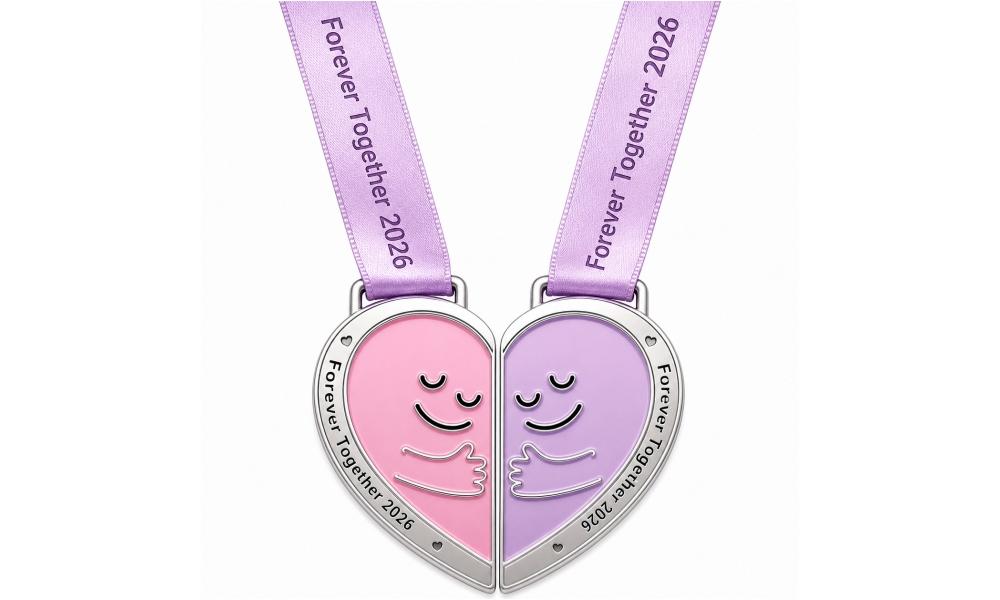
Before diving into design specifics, here's a side-by-side look at the most popular custom dance competition medal styles, so you can quickly identify which approach fits your event's look, budget, and award structure.
| Medal Type | Best For | Visual Effect | Relative Cost |
|---|---|---|---|
| 3D Sculpted Dance Figure | Overall champions, high-profile awards | Highly dynamic, captures dance pose and movement | Higher (detailed mold work) |
| Glitter / Sparkle Soft Enamel | All age groups, especially younger dancers | Catches stage and photo lighting, festive and eye-catching | Moderate |
| Translucent / Glow Enamel | Night showcases, finals ceremonies | Jewel-like translucency or soft glow-in-the-dark effect | Moderate to higher |
| Custom Cutout Silhouette Shapes | Brand differentiation, themed competitions | Distinctive outline (dancer silhouette, dance shoe, curtain shape) instead of a plain circle | Moderate (custom mold required) |
| Standard Round Die-Struck Medal | Large-volume participation medals | Clean, classic, cost-efficient at scale | Lower |
| Custom Ribbon & Lanyard Add-On | Every tier — reinforces branding | Extends event/sponsor branding beyond the medal face | Low incremental cost |
Dance is one of the most visually expressive sports and art forms out there, and custom dance competition medals should reflect that energy rather than defaulting to the same generic circular medal used for track meets or spelling bees. The following design elements are what separate a truly memorable dance medal from an off-the-shelf trophy catalog item.
The single most impactful upgrade an event organizer can make to a dance medal is commissioning a genuine 3D-sculpted dancer figure rather than a flat, engraved outline. A skilled medal design team can render a specific dance pose — an arabesque line for ballet, a dynamic freeze-frame for hip-hop, a flowing extended reach for contemporary — with real depth, muscle definition, and fabric movement captured in the relief. This level of sculptural detail requires designers who understand both artistic anatomy and the practical limits of metal casting; a pose that looks beautiful in a 2D sketch can become muddy or structurally weak once cast if the design team doesn't have hands-on production experience. Because dance styles vary so widely — ballet, jazz, tap, hip-hop, contemporary, ballroom, and more — many competitions commission multiple sculpted variants so the medal pose actually matches the dancer's discipline, rather than using one generic figure across every category.
Standard hard or soft enamel fills are fine for many event types, but dance competitions have an opportunity to lean into the sparkle and drama of the stage itself. Glitter soft enamel — enamel fill infused with fine metallic particles — replicates the shimmer of stage lighting and sequined costumes, making the medal feel like a natural extension of the performance rather than a separate, disconnected award. Translucent enamel, which allows light to pass through and reflect off the underlying metal plating, creates a jewel-like depth that photographs beautifully under stage and camera lighting. For evening showcases or glow-themed competitions, glow-in-the-dark enamel adds a memorable, almost magical effect as dancers exit a dimly lit venue — a small design touch that generates outsized social media buzz.
One of the fastest ways to make a dance medal instantly recognizable — and instantly differentiate your competition from every other regional dance event — is abandoning the standard circular medal shape altogether. Custom die-cut outlines shaped like a dancer's silhouette, a ballet shoe, a curtain call pose, or even your competition's logo mark create a medal that looks purpose-built rather than repurposed from a generic sports catalog. Cutout designs (where negative space is punched through the metal around the silhouette) add further visual drama and a sense of craftsmanship, though they do require slightly more precise mold engineering to ensure structural durability at thinner cutout points — another reason working with an experienced in-house design and engineering team matters.
Most dance competitions run a multi-tier award structure — from overall champions down to participation-level recognition — and each tier calls for a different balance of visual weight, materials, and per-unit cost.
Your top-tier awards — Overall Champion, Platinum, and Grand Champion titles — should be visually unmistakable as the highest honor of the event. This typically means a noticeably larger medal (commonly in the 3.5" to 4.0" diameter range), heavier gauge metal, full 3D sculptural relief, and premium bright plating. These medals are produced in relatively small quantities, which makes the added production cost per unit manageable within an overall event budget, while delivering maximum visual and emotional payoff for the dancers who earn them.
Beneath the overall champion tier, most competitions award placement medals across numerous age groups and dance style categories (solo, duo/trio, small group, large group; ballet, jazz, hip-hop, and so on). Rather than designing an entirely separate medal for every single category — which quickly becomes cost-prohibitive — most organizers use a shared base medal design with plating or ribbon color variation to indicate placement (bright gold, silver, and bronze finishes) and, where budget allows, back-engraving or a printed insert indicating the specific age division and category. This shared-mold approach keeps tooling costs manageable while still giving every category winner a medal that clearly reflects their specific achievement.
For competitions with a strong recreational or youth component, a well-designed participation medal matters just as much as the top awards — arguably more, since it's the medal the largest share of your dancers will actually take home. The goal here is finding the right balance: a design that still carries visual polish (a nice enamel finish, a tasteful smaller-scale dance motif, quality ribbon) at a per-unit cost that works at high volume. Skimping too far on this tier risks disappointing the majority of your participants and their families — often the parents most invested in returning next season — so it's worth treating the participation medal as a genuine design project rather than an afterthought.
Beyond design, successfully sourcing custom dance competition medals comes down to understanding how bulk manufacturing pricing and lead times actually work — especially for organizers running competitions across multiple cities in a single season.
Custom medal manufacturing involves an upfront mold/tooling cost that gets amortized across your total order quantity — meaning the more units you order from a given mold, the lower your effective per-unit price becomes. Most manufacturers offer tiered pricing structures, where crossing certain quantity thresholds unlocks a meaningfully lower unit rate. For multi-tier dance competitions, this often means it's more cost-effective to consolidate your participation medal order (typically your highest-volume tier) into a single larger production run, and to reuse the same base mold across age-group placement medals with plating/color variation, rather than commissioning entirely separate small-batch molds for every category.
Dance competition circuits frequently run a season-long tour — regional qualifiers in multiple cities feeding into a national or grand finals event — which means medal orders need to be planned well ahead of the first competition date, not just the finals. As a general planning guideline, organizers should budget 6–8 weeks of lead time from final design approval to delivery, accounting for mold-making, sample approval, mass production, quality inspection, and international shipping if sourcing overseas. Competitions running multiple regional stops should also plan inventory carefully across the tour — either producing enough participation medals to cover the entire season in one run, or coordinating a mid-season reorder with enough buffer time before the next city's event date.
Most placement and participation medals for dance competitions fall in the 2" to 3" diameter range, which is large enough to carry meaningful design detail without feeling oversized on a young dancer. Top-tier overall champion or grand champion awards are frequently scaled up to 3.5"–4.0" to create a clear visual distinction from category-level placements.
Yes. Custom-printed silk ribbons are a standard offering alongside custom medals, and can include your competition's logo, event name, tour/season branding, and sponsor names or logos printed along the length of the ribbon. This is also one of the most cost-effective ways to fulfill sponsor visibility commitments without adding clutter to the medal face itself.
A reliable custom medal manufacturer should always provide 2D and 3D digital proofs — and ideally a physical pre-production sample — before committing to mass casting. This is especially important for dance medals given the reliance on detailed sculptural poses, since digital renderings can look different once translated into an actual metal relief. Confirming both the digital 3D proof and a physical sample protects you from costly surprises once the full order is in production.
Custom dance competition medals deserve a manufacturing partner who understands both artistic sculpture and the practical realities of large-scale event production. Shenzhen Vistarts Craft Co., Ltd. is a self-owned factory established in 2011, spanning over 10,000 square meters with 150+ employees, 50+ modern machines, and 5 dedicated production lines — giving us the capacity to handle everything from a single regional showcase to a full multi-city competition tour without missing a deadline.
Our in-house design team of 20+ professionals brings hands-on production expertise to every project, meaning your dance figure sculpting, glitter and translucent enamel effects, and custom silhouette cutouts are designed to actually cast beautifully — not just look good on screen. With access to over 1,000 existing custom medal designs, ISO9001 certification, RoHS and CE compliance, a dedicated 10+ person QC team, and factory audit approval from Disney and Universal Studios, we bring the same rigor to a youth dance participation medal as we do to medals produced for events like the Paris Olympics and Qatar World Cup. We also offer free 2D/3D digital proofing and pre-production physical samples, plus a full refund guarantee if bulk production ever deviates from your approved sample.
Planning your next dance competition season? Share your award tier structure and design vision with our team, and we'll help you map out a shared-mold strategy that keeps every tier — from Grand Champion to first-time participant — looking spectacular within your budget. Visit vistarts.com to request your free custom quote and design consultation today.

58 South Union Road, South Union Community, Shenzhen, Guangdong, China