View:67605Time:2026.10.19
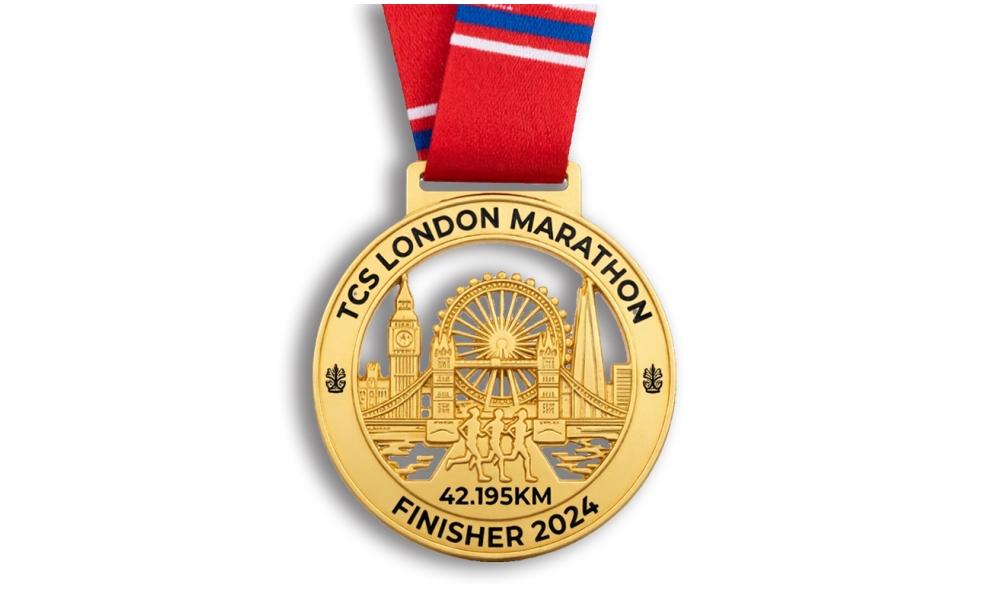
Custom medals for kids are a different product from marathon medals, and most suppliers won't tell you that. A 76mm, 3.5mm, 110-gram finisher medal is the right object for a 42km finish line. Put the same medal around the neck of a seven-year-old at sports day and it hangs past her stomach, swings when she runs, and comes off before the class photo. We've cast medals for four-year-olds and for Olympic programmes, and the brief differs in almost every line — size, weight, ribbon length, edge finishing, plating chemistry and the paperwork your school office needs before it can pay the invoice.
This guide is what we send to teachers, PE coordinators, parent-teacher associations and youth running clubs who are ordering for the first time. Sizes and weights by age, the safety tests that actually matter (and the ones suppliers use as decoration), what a school order really costs in 2026, how the school calendar collides with factory production, and the mistakes we see every spring.
For children aged 4–12, order 45–55mm medals at 2.0–2.5mm thickness, 20–30 grams, on a 20mm ribbon cut to 60–70cm with a breakaway or clip fitting. Standard minimum order is 50–100 pieces per design, unit cost runs $1.10–$1.80 at 500–999 pieces, and production takes 10–15 working days after artwork approval. Order at least eight weeks before the event date.
| Age Group | Diameter | Thickness | Weight | Ribbon |
|---|---|---|---|---|
| Age 4–6 (reception / kindergarten) | 40–45mm | 2.0mm | 15–22g | 20mm × 60cm, breakaway |
| Age 7–9 (primary / elementary) | 45–50mm | 2.0–2.5mm | 20–28g | 20mm × 65cm |
| Age 10–12 (upper primary) | 50–55mm | 2.5mm | 26–35g | 20–25mm × 70cm |
| Age 13–17 (secondary / high school) | 55–65mm | 2.5–3.0mm | 35–55g | 25mm × 80cm |
| Whole-school event, one design | 50mm | 2.5mm | 28–32g | 20mm × 65cm |
Six buyer types order children's medals from us, and they almost never want the same thing.
Primary and elementary schools order for sports day, cross-country, swimming galas and end-of-year awards. The order is usually 200–800 pieces, paid from a fixed departmental budget, approved by a head teacher or business manager, and delivered to a school office that needs a proper invoice with a purchase order number. The date is immovable — sports day happens whether or not the medals arrive.
PTAs and parent associations order for fun runs and fundraising events. Budget is smaller, approval is faster, and someone is volunteering their evening to do this. They need simplicity: one design, one price, one delivery address, no surprises.
Youth running clubs and track programmes order kids running medals for season-end awards, often with age-group placement (1st/2nd/3rd in U8, U10, U12). This is where tiered designs pay off — same medal body, different ribbon colours or a small "1st" plate, instead of three separate molds.
Sports clubs — football, basketball, gymnastics, dance, martial arts — order participation medals in volume at the end of each season, often 40–120 per age group, and often on a tighter deadline than schools because the season ends when it ends.
Camps and community programmes order weekly or fortnightly batches through the summer, which means repeat orders of the same design. That's the cheapest possible position to be in: the mold exists, so reorders skip setup entirely and run 7–12 days.
Event organisers running kids' races inside an adult race — a 1km dash before the half marathon — need small medals that match the adult medal's design language without matching its price. Parents photograph both medals side by side. They should look related.
Four physical differences, and each one has a cost or a safety consequence attached.
Weight is the first constraint, not size. A marathon medal is designed to be photographed and worn for an hour. A child's medal is designed to be worn for a week, slept in, taken to school, and swung around by the ribbon. Above roughly 40 grams, children under eight start taking it off. Above 60 grams, they hand it to a parent within twenty minutes. This is not a guess — it's the feedback loop from every school order we've shipped.
Edges need finishing, not just stamping. Children hold medals by the rim, rub them against their faces, and drop them. The die-struck or cast edge comes off the machine with a slight burr; it has to be tumbled and deburred to a radius rather than left sharp. Ask your supplier what edge radius they finish to. "Smooth" is not an answer with a number in it.
Enamel has to survive being a toy. Soft enamel sits in recessed channels and has a tactile texture children pick at. Hard enamel is polished flat and wipes clean — better for medals that will end up in a pocket with a sandwich. For under-tens we usually recommend soft enamel for colour brightness and cost, with a hard enamel upgrade on the top age group. Either way, the enamel must be fully cured and tested for heavy-metal migration, which is the next section.
Nothing should detach. Spinning centres, dangling year plates and clip-on attachments are the most popular features we make for kids — and the ones to think hardest about. A spinning element is a riveted assembly, not a loose part, but on a medal for a five-year-old it's a legitimate question to ask how the rivet is secured. We specify a peened solid rivet rather than a split pin for exactly this reason.
Here is the honest version, because there's a lot of noise in this category.
A medal is not legally a toy. Under EU toy safety rules (EN 71) and US CPSC rules, a commemorative medal isn't classified as a toy, and a supplier who tells you their medal is "EN71 certified as a toy" is usually dressing up a test report as a classification. What matters is that the materials and finishes pass the tests your school, district or insurer actually asks for.
Those are, in practice:
Two practical notes from the factory floor. First, a test report is only meaningful if the product name, material and finish on it match what you're buying — a report for a brass keychain with no enamel tells you nothing about an enamel medal. Second, testing is per batch, not per design forever; if your supplier changes plating chemistry or enamel source, the old report is history. We test on the same production line that runs the order, and we'll send the report with the batch number on it.
For US school districts, add this: many require a certificate of compliance on file before a purchase order is released, and some require the supplier to be registered as a vendor. Ask for the paperwork early. It's a bigger cause of late deliveries than production is.
The rule we work to: the medal should sit on the chest, not the stomach. That single constraint sets both diameter and ribbon length, and it's why kids' medals aren't just scaled-down adult medals.
| Age | Recommended Size | Target Weight | Why |
|---|---|---|---|
| 4–6 | 40–45mm, 2.0mm | 15–22g | Light enough to forget it's on; sits at chest height on a 60cm ribbon |
| 7–9 | 45–50mm, 2.0–2.5mm | 20–28g | Room for a mascot and one line of text, still comfortable all day |
| 10–12 | 50–55mm, 2.5mm | 26–35g | Reads clearly in a class photo at arm's length |
| 13–17 | 55–65mm, 2.5–3.0mm | 35–55g | Teenagers want something that looks like an adult medal |
| Whole school, one SKU | 50mm, 2.5mm | 28–32g | The compromise that works from age 7 to 12 without complaint |
If a school insists on one design across reception to year six, go with 50mm and solve the age difference with ribbon colour — red for the juniors, blue for the seniors. It costs nothing, it reads as intentional, and nobody has to explain to a six-year-old why their medal is smaller.
Thickness is where a small medal can still feel substantial. Going from 2.0mm to 2.5mm on a 45mm medal adds roughly 8 grams and around $0.08–0.12 per piece at 500 pieces. That's the cheapest quality upgrade available in this product category, and it's the one we push most often for school budgets.
Adult race medals ship on a 90cm ribbon — roughly a 45cm drop. On a 120cm-tall child, that puts the medal at stomach level, which looks wrong in every photograph and swings into everything. Kids' medals should run 60–70cm total, giving a 30–35cm drop.
The fitting matters as much as the length. For under-sevens, a ribbon that goes over the head with no release mechanism is a genuine strangulation risk on playground equipment, and a growing number of schools and insurers won't accept it. The two options we supply:
Ribbon quality is also where cheap orders reveal themselves. A 20mm polyester ribbon with a hot-cut sealed end costs a few cents and lasts a season. A ribbon with a raw woven end starts fraying in a child's hand within a day, and by the end of sports day the tassels look like a broom. Ask whether the ends are heat-sealed. It's a two-second question with a visible answer.
Children read medals differently from adults. They don't evaluate typography. They look for a shape, a face, a colour, and their own name if it's there.
What consistently works:
What consistently fails: text under 1.5mm cap height (unreadable after plating), gradients and photographic artwork (they can't be reproduced in enamel), six or more colours (each colour is a separate hand-fill pass, and on 500 pieces that's 3,000 fills), and long event names wrapped onto a curved edge.
One more design decision schools forget: the back. The front gets all the attention, but the back is where you put the school name, the date, the event, and the space for a handwritten name if you're not engraving. A blank back on a school medal is wasted real estate.
This is the request that separates school orders from every other order we run, and it's worth understanding the cost structure before you promise it to a committee.
Laser engraving on the back runs $0.15–0.30 per medal and needs a clean name list — one name per row, spelled exactly as it should appear, with the class or year group in a separate column. Production then has to engrave, match and bag each medal individually, which is manual work. On 400 medals that's a day of labour, and it's why an engraved order carries a longer lead time: 15–20 working days rather than 10–15.
Printed name labels are the budget alternative. We print a sheet of adhesive labels matched to the medal back recess, the school applies them, and the cost is close to nothing. It looks less permanent, but for a one-day event it's a perfectly reasonable answer.
Class-bagged packing is the operational detail that saves the teacher's evening. Instead of one carton of 400 loose medals, we pack in bags labelled by class — "Year 3, 28 pieces" — with a packing list inside each. It adds $0.05–0.15 per medal and turns a two-hour sorting job into a five-minute handout. Ask for it before production starts, not after; repacking a finished order is expensive.
These are real factory prices for a 50mm zinc alloy medal, single-colour plating, soft enamel, 20mm ribbon, ex-works Shenzhen. Add freight, and add 5–10% if you want individual names.
| Quantity | Unit Price (50mm, soft enamel) | Mold Fee | Typical Buyer |
|---|---|---|---|
| 50–99 | $2.30 – $2.90 | $80 – $150 | Single class, small club |
| 100–499 | $1.90 – $2.40 | $80 – $150 | One year group, small school |
| 500–999 | $1.10 – $1.80 | Often waived | Whole-school sports day |
| 1,000–2,999 | $0.95 – $1.40 | Waived | District programme, multi-school |
| 3,000+ | From $0.85 | Waived | City-wide youth series |
Read that table against a typical school budget and the shape of the decision becomes obvious. At 200 pieces you're near $2.20 each and the $120 mold is a real line item. At 600 pieces you're near $1.45 and the mold is usually absorbed. The difference between a 200-piece order and a 600-piece order is not 3x the money — it's about 2x. Which is why combining year groups, or combining two schools in a district, changes the economics more than shopping around for a cheaper supplier does.
Where to save without losing the reaction:
School medal orders fail on timing far more often than on price. Two calendars have to line up, and one of them closes for two weeks in February.
| Event Date | Place Order By | Artwork Approved By | Watch Out For |
|---|---|---|---|
| Sports day, May–June | Early March | Mid-March | Peak season — production slots fill from March |
| End-of-year awards, June–July | Mid-April | Late April | Shipping congestion in June |
| Cross-country, Sept–Oct | Mid-July | End of July | Order before the summer break, not after |
| Christmas / winter event, Dec | Early October | Mid-October | Express freight rates spike in November |
| Any date Jan–Feb | Late November | Early December | Chinese New Year closure, 2–3 weeks |
The Chinese New Year point deserves its own paragraph. Our plant closes for roughly two to three weeks around the holiday, and so does every plating shop, ribbon printer and die-cutter in the region. Nothing moves. An order placed in mid-January for a March event is not a two-week-late order; it's an order that sits untouched for a month. We tell customers this every year and every year someone discovers it too late.
Add the shipping buffer on top: express is 3–7 days, air freight 7–12, sea 25–35. For a school, express or air is almost always right — the freight difference on 500 light medals is a few hundred dollars, and the cost of missing sports day is the whole budget.
Six steps. The first two are the ones schools control.
1. Lock the headcount, not the estimate. "About 300" becomes 340 when the register is finalised. Count by year group, add 10–15% for spares, and order once. Adding 40 pieces later triggers a second setup and usually a second shipping charge.
2. Get the paperwork moving early. Purchase order number, vendor registration form, tax or exemption details, delivery address with a named contact and a delivery window. A school office that closes at 3:30pm and a courier that arrives at 4pm is a redelivery fee.
3. Artwork. Send the crest as a vector file (AI, EPS, PDF or SVG) if it exists. If it only exists as a JPEG on the school website, we redraw it — that's included in the design service, but it takes a day and needs sign-off. Decide the colour matches against a physical reference where possible; screen colours and enamel colours don't agree.
4. Sample approval. A pre-production sample in the actual plating and enamel takes 7–10 days including the mold. Approve it in daylight, at arm's length, and check the text sizes. That sample becomes the quality reference for the bulk run.
5. Production. 10–15 working days standard for 500–1,000 pieces; 15–20 with individual names; longer in peak season. We send QC photos before packing, and you can request a video of the finished batch.
6. Delivery and invoice. DDP delivery to the school office means the freight and duties are on our side of the invoice, which most school finance offices prefer because it produces one clean number. Shipping documents, packing list by class, and the test report travel with the shipment.
1. Ordering in the same month as the event. The single most common failure. Eight weeks is the realistic minimum door to door; ten is comfortable.
2. Buying adult medals because they're cheaper per unit at volume. They aren't cheaper once you account for the fact that half the children won't wear them, and the photos show it.
3. Forgetting the ribbon is part of the product. A 90cm adult ribbon on a 45mm children's medal is the most visible sign of a supplier who doesn't make this product.
4. Ordering exactly the headcount. No spares means no medal for the child who was off sick, the one who broke theirs, or the new arrival in the last week of term.
5. Designing the crest at 8mm. A detailed school crest shrinks into mush below about 15mm. Simplify it for metal — that's a design decision, not a production problem.
6. Assuming a test certificate covers your order. Check the product name, material and finish on the report. A report for a different product is a piece of paper.
7. Splitting the order across suppliers to save a few cents. Two batches means two plating colours that don't match, and 400 medals where the reds are visibly different in the class photo.
8. Not asking for class-bagged packing. The medal is fine; the two hours of sorting on the morning of sports day is the part nobody budgeted for.
For a 50mm zinc alloy medal with soft enamel, single-colour plating and a 20mm ribbon: about $2.30–$2.90 each at 50–99 pieces, $1.90–$2.40 at 100–499, $1.10–$1.80 at 500–999, and from $0.85 at 3,000+. Mold fees run $80–$150 and are usually waived above 1,000 pieces. Individual name engraving adds $0.15–$0.30 per medal.
40–45mm at 2.0mm for ages 4–6, 45–50mm at 2.0–2.5mm for ages 7–9, 50–55mm at 2.5mm for ages 10–12, and 55–65mm for teenagers. Keep the weight under 30 grams for primary-age children and under 22 grams for under-sevens. A medal that's too heavy gets taken off, and a medal that isn't worn doesn't get photographed.
We test enamel and plated surfaces to EN 71-3 for heavy-metal migration, to CPSIA lead limits (100 ppm substrate, 90 ppm surface coating) for the US, and to EN 1811 / REACH for nickel release at 0.5 µg/cm²/week. Ribbons are tested for restricted phthalates. Edges are deburred and radiused rather than left sharp. Reports are issued against the actual material and finish of your order, with the batch number on them.
50 pieces per design for standard zinc alloy medals, and 25 pieces for stock blank medals with a printed or engraved logo. Complex work — custom shapes, spinning centres, hard enamel, 3D relief — starts at 100–300 pieces because the setup cost per unit only makes sense at that volume.
Yes. Laser engraving on the back runs $0.15–$0.30 per medal and needs a clean name list with class groups in a separate column. Allow 15–20 working days instead of 10–15, because engraving, matching and bagging is manual work. A cheaper alternative is printed name labels applied by the school.
Eight weeks before the event at minimum, ten is safer. That covers 5–7 days for the mold, 7–10 for the sample, 10–15 for production, and 3–7 for express freight, plus a buffer for artwork changes. Add three weeks if your event falls between January and mid-February because of the Chinese New Year shutdown.
Yes, DDP to the school office, with freight and duties included on our invoice so the finance office sees one number. We need a named contact, a delivery window during office hours, and a purchase order number if your district requires one. Medals can be packed and labelled by class so distribution takes minutes rather than an afternoon.
Send us three things — the age groups, the headcount per group, and the date of the event — and we'll come back within 24 hours with a size recommendation, a unit price at your quantity, and a delivery date you can put in front of a head teacher. Free design work included, including redrawing a school crest from a low-resolution image, and you keep the artwork rights.
Shenzhen Vistarts Craft Co., Ltd. has been making custom medals since 2011 in our own ISO9001-certified factory — over 10,000 square meters, 5 production lines, 50+ machines, 150+ employees, 20+ engineers and a 20-person design team working next to the production floor. The plant has passed audits for Disney and Universal Studios, and our medals have supported the Paris Olympics, the Qatar World Cup and major marathon events. We hold 1,000+ medal designs on file and produce everything from 40mm children's medals to 120mm commemorative pieces, all RoHS and CE compliant, with a full refund if bulk production doesn't match your approved sample.
Tell Sean your age groups and headcount:
WhatsApp / Phone: +86 181 2379 9506
Email: sean@vistarts.net
Website: https://www.vistarts.com/
One last thing worth saying plainly: a school medal has a job that a marathon medal doesn't. It has to survive a seven-year-old for a week and still look good in the photo their parents keep. That's a lower price point and a higher standard at the same time — which is why the size, the weight and the ribbon matter more here than the artwork does.

58 South Union Road, South Union Community, Shenzhen, Guangdong, China