View:19849Time:2026.11.10
Every January, race directors ask us the same question: what are other events doing? Not because they want to copy anyone — because a finisher medal is now a marketing asset, and the medals that get photographed, posted and collected are the ones that fill next year's registration. We sit at the point where hundreds of events' design decisions converge, so we see the direction of travel before it shows up in trend articles.
These are the race medal trends 2027 will be built on — eight directions, each with what it is, why it's happening now, what it costs, which events it suits, and one honest note on where it doesn't work. This page updates every year; the 2027 edition reflects what we saw in orders through late 2026.
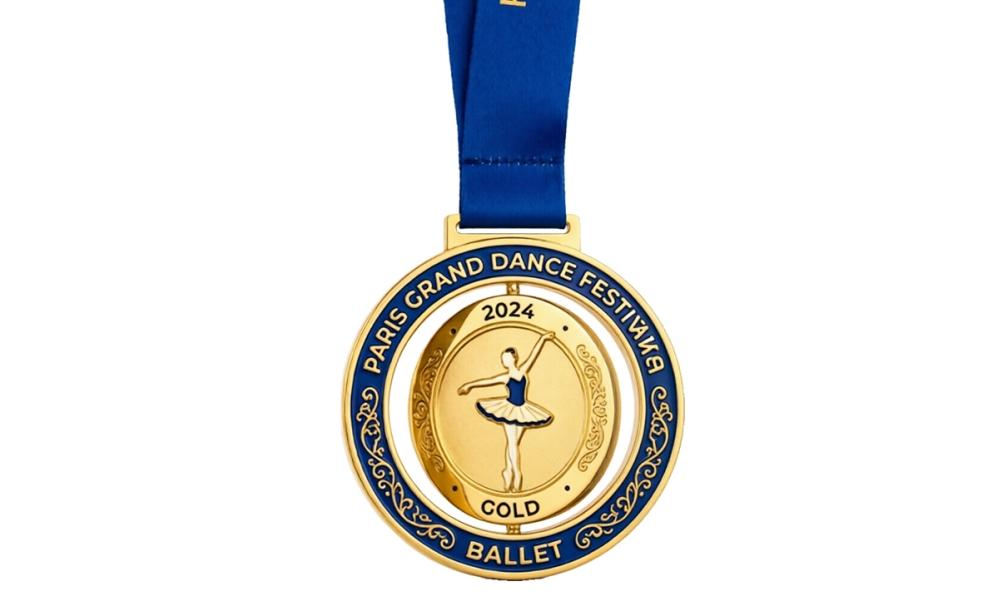
The eight directions for 2027 race medals: 1) weight and thickness over diameter, 2) recycled materials with proof, 3) collector and streak series, 4) kinetic (spinning and sliding) elements, 5) default personalisation with engraved names, 6) hyper-local design identity, 7) advanced light effects, and 8) digital integration on the physical medal. The strongest 2027 orders usually combine one hero feature from this list with a disciplined, simple base design — not four features at once.
| Trend | Cost Impact (per medal, 1,000 pcs) | Best Fit |
|---|---|---|
| Weight over size (3.5–4mm) | +$0.15–0.35 | Half/full marathon, flagship |
| Recycled materials + proof | +$0.10–0.25 | City races, corporate, youth |
| Collector / streak series | +$0.10–0.40 (plate or colour) | Series, annual events |
| Kinetic elements | +$0.80–2.00 | Fun runs, half marathon, kids |
| Engraved name personalisation | +$0.15–0.30 | Any event above 300 finishers |
| Hyper-local identity | +$0.10–0.30 (shaped die) | Destination and city races |
| Light effects (glow/UV reactive) | +$0.15–0.45 | Night runs, winter events |
| Digital integration (QR/NFC) | +$0.05–0.80 | Virtual races, tech-forward events |
A finisher medal does three jobs: it certifies, it commemorates, and — increasingly the one that decides budgets — it markets. The medal appears in the photos that recruit next year's field. That's why trend awareness is worth money, not vanity.
But trends have a failure mode: stacking them. A medal with a spinner, a shaped silhouette, glow enamel, two plating tones and a QR code runs $6–9 per piece at 1,000 units and looks like a souvenir shop. The pattern in our strongest 2026 orders — the ones clients came back to repeat — was one hero feature, executed well, on a disciplined base. Treat the eight directions below as a menu of one, not a checklist of eight.
And one honesty note up front: if your race is a community 5K where the medal's job is to say "you did it" to 300 neighbours, a clean 60mm soft enamel medal with a printed ribbon is not behind any trend. Trends matter most where the medal competes for attention — destination races, big-city events, competitive series.
What's happening: diameter growth has stalled; thickness and weight are climbing. Through 2026 we shipped noticeably more 76mm medals at 3.5–4mm than at the old 3mm standard, and more 89mm flagship pieces at 4–4.5mm.
Why now: the giant flat medal peaked. A 102mm medal at 2.5mm reads as a big coin; a 76mm at 4mm reads as an object. Hand-feel photographs better than surface area — and since most finisher medals are consumed as photos, density now outperforms diameter per dollar.
Cost: going 3mm to 4mm on a 76mm medal adds roughly $0.15–0.35 per piece at 1,000 units. Compare that to the $0.60+ jump from 76mm to 89mm, and the value case writes itself.
Factory note: deep relief needs metal behind it. If you're going thick, that's the moment to commission real 3D sculpting — the two upgrades multiply each other.
What's happening: "eco" moved from marketing copy to specification. The 2027 version isn't a green-coloured ribbon; it's recycled zinc alloy bodies, rPET ribbons, plastic-free packaging, and documentation.
Why now: two pressures converged. City permits and sponsor contracts increasingly ask for sustainability evidence, and participants have learned to distrust unverifiable claims. The events getting credit are the ones that can name the material and show the certificate.
What it costs: rPET ribbon runs 5–20% over standard satin ($0.02–0.05 per medal); recycled alloy content adds roughly $0.05–0.15; a kraft or recycled-board presentation sleeve instead of a poly bag is roughly cost-neutral. Total premium: $0.10–0.25 per medal — the cheapest credibility purchase on this list.
Factory note: ask for the material certificate with the shipment, and put the claim on the spec sheet, not just the website. "Recycled content, certificate provided with batch" is a defensible sentence; "eco-friendly medal" is not.
What's happening: single medals are becoming series. Three structures are growing: multi-year streak medals (a frame that accepts year plates, so five-year runners build a set), distance ladders (5K/10K/half/full that combine into one crest), and season collections across a club's or city's event calendar.
Why now: registration economics. A collector system converts a one-time participant into a returning one, and the medal is the visible scoreboard. Events running streak programmes report it in their marketing precisely because it works.
Cost: the trick is that a series costs almost nothing extra per medal if it's designed as one system — same body die, variable year or distance plates ($50–80 per plate die), or one enamel colour change per edition. The cost is in design discipline, not tooling: commit to the system in year one and the marginal cost of years two through five is near zero.
Factory note: design the whole five-year system now, even if you produce year one only. Locking the silhouette, the plate position and the colour logic early is what keeps year three from becoming a mismatched afterthought.
What's happening: the spinning centre — 2024–2026's dominant premium feature — is being joined by sliding elements (a runner figure that moves along a track channel) and dual spinners (two rotating discs on one medal).
Why now: kinetic features are the only medal characteristics that generate video, and video is the highest-value social content a finish line produces. A spinning medal gets filmed; a flat medal gets photographed.
Cost: single spinner $0.80–2.00; dual spinner $1.60–3.00; sliding element $1.20–2.50 — all at 1,000 units. Kinetic remains the most expensive direction on this list, which is exactly why it should be the single hero feature, not one of four.
Factory note: the quality variable is the rivet. A peened solid rivet survives seasons of fidgeting; a split pin works loose and the disc rattles then detaches — and a detached spinner on a children's medal is a small-parts problem, not just a warranty one. Ask how the moving part is secured.
What's happening: engraved names — and increasingly engraved finish times — are shifting from a premium add-on to an expected feature on mid-size and large events.
Why now: the cost fell and the workflow matured. Laser engraving at $0.15–0.30 per medal plus a clean roster is now routine at 1,000+ units, and events discovered that "your name on the medal" is the single most-mentioned feature in post-race feedback.
Cost: $0.15–0.30 per medal plus 3–5 production days. Finish-time engraving is harder: times aren't final until race day, so the realistic implementations are (a) chip-time engraved for a later certificate rather than the medal itself, or (b) an on-site engraving station, which is a service contract, not a factory feature.
Factory note: the constraint is the roster, not the laser. Lock participant names at registration close, require a spelled-out list with a class or wave column, and build the 15–20 day production window that engraving needs. Late rosters are the cause of every engraved-order disaster we've seen.
What's happening: generic "running figure + laurel" design is retreating, replaced by specific local identity: a shaped die of the city skyline, a landmark in real 3D relief, a neighbourhood the route actually passes, local dialect phrases, even the exact elevation profile of the course rendered in relief.
Why now: participants increasingly choose races for place, and a medal that could belong to any city photographs as belonging to no one. The local medal is also the one that gets kept — which is the entire emotional point.
Cost: a custom-shaped die adds 5–15% to unit cost plus $50–150 in tooling; genuine 3D sculpting of a landmark adds $0.30–0.80. On a 2,000-piece city marathon, a fully localised design typically costs $600–1,200 more than a generic one — against a marketing budget where a single registration is worth $80–150.
Factory note: local detail dies on fine linework. A Gothic cathedral facade with 0.2mm tracery will not cast; a landmark rendered in bold masses will. Design for the metal, not for the postcard — and check the minimum feature widths before committing to a detailed motif.
What's happening: classic glow enamel is being joined by UV-reactive inks (invisible by day, fluorescent under blacklight — built for after-parties), segmented glow (only certain design elements glow, revealing a hidden image at night) and translucent enamel over reflective plating.
Why now: night runs, winter events and festival-format races keep growing, and a light-reactive medal is a built-in moment: hold it under the UV lamp at the after-party and the hidden design appears. That's a filmed moment.
Cost: glow enamel $0.15–0.35; UV-reactive print elements $0.20–0.45; segmented glow is a design decision more than a cost one — glow only where the design wants it, and the price barely moves.
Factory note: glow reads best as a shape, not a surface. A whole medal that glows vaguely is less magical than a moon, a trail line or a star field that appears. Design the dark-state image first.
What's happening: medals are gaining a digital layer — laser-etched QR codes on the back (linking to results, certificates, photo galleries or next-year early-bird registration), serial numbers for limited editions, and in a few premium cases NFC tags embedded in the ribbon crimp.
Why now: it's the cheapest trend on the list and the only one that generates a measurable return: an early-bird registration link on 2,000 medals is a conversion channel, not a decoration.
Cost: etched QR or serial number: $0.05–0.10 per medal, essentially free at volume. Embedded NFC: $0.60–0.80 plus assembly time — still niche, and honestly more demo than deployment at current prices.
Factory note: etch the QR on the back in the same pass as the name engraving; the marginal cost is nearly zero. Test the link at production scale — 2,000 medals pointing at a link that expired is a self-inflicted wound, and use a redirect URL you control so the destination can change after the medals ship.
Same baseline throughout: 76mm zinc alloy, soft enamel, single-tone plating, printed 25mm ribbon, 1,000 pieces. Baseline unit price $1.30–1.60.
| Configuration | Add-On | Resulting Range |
|---|---|---|
| Baseline only | — | $1.30 – $1.60 |
| + 4mm thickness (Trend 1) | +$0.15–0.35 | $1.45 – $1.95 |
| + recycled materials with certificates (Trend 2) | +$0.10–0.25 | $1.55 – $2.00 |
| + year-plate system, one plate die (Trend 3) | +$0.10–0.20 | $1.65 – $2.10 |
| + single spinner (Trend 4) | +$0.80–2.00 | $2.45 – $4.10 |
| + engraved names (Trend 5) | +$0.15–0.30 | $2.60 – $4.40 |
The table is deliberately cumulative to make one point: trends are affordable one at a time and reckless together. A 2027 medal that carries thickness, recycled proof, a streak plate and engraving lands around $2.60–2.80 — a genuinely premium object for under three dollars. Add a spinner and you've nearly doubled the price for one more feature that competes with the first.
Oversized for its own sake. The 110–120mm medal had its moment. Unless the event identity genuinely demands spectacle, the money converts better into thickness and finish quality — see Trend 1.
More colours. Six to eight enamel colours was a 2023 flex; in 2027 it reads as busy, and each colour is another hand-fill pass and another defect opportunity. Two or three confident colours photograph better than six muted ones.
NFC at scale. The technology works; the economics don't yet. A $0.70 tag per medal is a QR code's job for one-hundredth of the price. Revisit when tag prices fall — or when the medal itself is the product being sold.
Trend-forward medals need longer lead times than standard ones — shaped dies, 3D sculpting and kinetic assembly all add days. Working back from a spring 2027 event:
| Weeks Before Event | Milestone |
|---|---|
| 20–24 weeks | Choose your one hero trend; brief the design; get quotes |
| 16–20 weeks | Artwork approved; die ordered; production slot booked |
| 14–16 weeks | Pre-production sample approved (this is the golden sample) |
| 10–14 weeks | Bulk production; roster locked if engraving |
| 8–10 weeks | QC photos, balance payment, shipment booked |
| 3–7 weeks | Transit; medals on-site |
And the calendar traps, same as every year: spring events (March–June) compete for production slots from January, and the Chinese New Year shutdown — late January to mid-February 2027 — freezes tooling, plating and freight for two to three weeks. A 2027 medal ordered after the second week of January without a slot booked is already negotiating with the calendar.
Weight and thickness over diameter, recycled materials with verifiable certificates, collector and streak systems, kinetic elements, default name engraving, hyper-local design identity, advanced light effects, and digital integration such as etched QR codes. The strongest designs combine one hero trend with a simple base — not several at once.
Individually, from $0.05–0.10 for an etched QR code to $0.80–2.00 for a spinner, at 1,000 pieces. A premium combination — 4mm thickness, recycled materials, a streak plate and name engraving — lands around $2.60–2.80 per medal against a $1.30–1.60 baseline.
Yes — they remain the only medal feature that reliably generates video content, and they've been joined by sliding elements and dual spinners. The quality variable is the rivet construction: a peened solid rivet survives years of handling; a split pin works loose. Ask your factory how the moving part is secured.
Slightly more expensive and worth it where it counts: recycled alloy, rPET ribbon and plastic-free packaging add roughly $0.10–0.25 per medal. The 2027 shift is verifiability — events that can show a material certificate get the marketing credit; events that only use the word "eco" don't.
Names, yes — $0.15–0.30 per medal, with a locked roster at registration close and a 15–20 day production window. Finish times, not on the standard medal: results aren't final until race day, so events engrave names and handle times through certificates or on-site engraving stations.
20–24 weeks before the event for a trend-forward design: five to six weeks for artwork, die and sample, four to six for production (longer with engraving or kinetic assembly), plus transit. Spring events should have production slots booked before the Chinese New Year shutdown in late January 2027.
Engraved names for events above 300 finishers, or a hyper-local shaped design for destination races — both deliver a disproportionate emotional and marketing return for $0.10–0.30 per medal. Glow effects are the best value for night and winter events. Small community races with tight budgets lose nothing by ignoring trends entirely; a clean, well-weighted 60mm medal never reads as dated.
Pick one direction from this page — or send us your event's story and let our design team propose the hero feature — and we'll come back inside 24 hours with concepts, a costed comparison of the options at your quantity, and a production schedule anchored to your race date. Free design work, you keep the artwork rights, and your die stays on file so year two of any collector system is a fast, cheap repeat.
Shenzhen Vistarts Craft Co., Ltd. has manufactured custom race medals since 2011 in our own ISO9001-certified factory — over 10,000 square meters, 5 production lines, 50+ machines, 150+ employees, 20+ engineers and a 20-person design team working beside the production floor. The plant has passed audits for Disney and Universal Studios, and our medals have supported the Paris Olympics, the Qatar World Cup and major marathon events. We hold 1,000+ designs on file — spinning, 3D, custom-shaped, glow-in-the-dark, engraved — all RoHS and CE compliant, with a written full-refund guarantee if bulk production doesn't match your approved sample.
Talk to Sean about your 2027 medal:
WhatsApp / Phone: +86 181 2379 9506
Email: sean@vistarts.net
Website: https://www.vistarts.com/
One prediction to close, from where the orders come in: the events that win attention in 2027 won't be the ones with the most features on the medal. They'll be the ones where one detail — a sliding runner, a skyline in real relief, a hidden glow image at the after-party — gives finishers a reason to hold the medal up to a camera. Design for that moment, and the trend takes care of itself.

58 South Union Road, South Union Community, Shenzhen, Guangdong, China