View:31062Time:2026.10.02
"Send your design and we'll quote you" is not an answer when you're building an event budget. If you've ever received two quotes for custom medals that differed by 40% and wondered which supplier was lying, the truth is usually simpler: they weren't quoting the same thing. Quantity, material, size, plating, enamel, tooling, ribbon, packaging, and shipping terms each move the number, and small changes in any one of them can swing your per-medal cost by a dollar or more.
Below is the full cost structure, the way we explain it to race directors and event buyers every week — with 2026 price ranges, real budget examples for a 500-medal and a 5,000-medal order, and the specific choices that give you the biggest savings without making your medals look cheap.
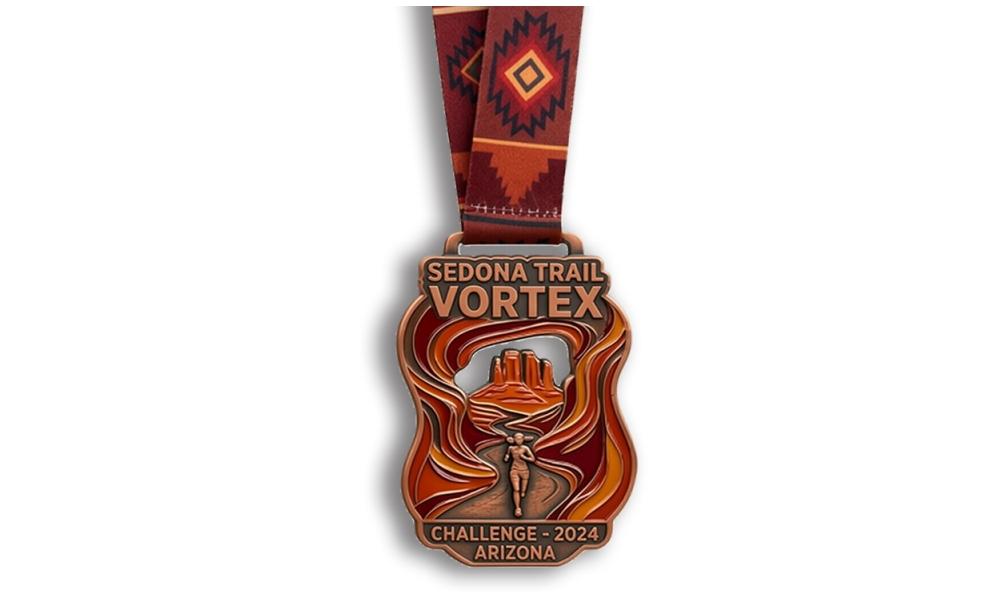
Custom medal pricing comes down to nine variables: quantity, material, size and thickness, plating finish, surface art (enamel, printing, 3D relief), mold fee, ribbon, packaging, and shipping method. Quantity is the single biggest lever — unit cost can drop 40–60% between a 100-piece and a 3,000-piece order. Get those nine right and your quote stops feeling like a mystery.
Here's the baseline first, so the rest of this article has an anchor. For standard zinc alloy medals with single-color plating, factory-direct pricing in 2026 looks like this:
| Quantity | Price Per Medal (USD) | Who Orders This Volume |
|---|---|---|
| 100–499 pcs | $2.40 – $2.80 | Fun runs, school events, club championships |
| 500–999 pcs | $1.70 – $2.10 | 10K and half marathon events |
| 1,000–2,999 pcs | $1.30 – $1.60 | City marathons, race series |
| 3,000+ pcs | From $1.15 | Major marathons, multi-event programs |
Those figures exclude the one-time mold fee ($80–$300) and freight. Anything on top of a 2D round zinc medal — 3D sculpture, spinner, glow-in-the-dark enamel, custom shape — adds to them. Now let's take each factor apart.
The reason the price falls so fast with volume isn't just material buying power. Mold and tooling costs get spread across more pieces, production lines run longer without changeovers, and hand work per medal — enamel filling, polishing, inspection — happens in larger batches. Going from 300 medals to 1,000 typically saves 30% per piece. Going from 1,000 to 3,000 saves another 15–20%.
But here's where buyers outsmart themselves: they trim the order to hit a lower total. Ordering 480 medals instead of 500 doesn't save meaningful money, and it can actually push you into the same price band anyway. Worse, if you run short on race day you're reordering a small quantity at 100-piece pricing — the exact price you were trying to avoid.
Our advice, and we give it even when it costs us a line item: order 10–15% more than your expected finisher count. Extra medals are cheap at volume and priceless when day-of registration runs hot. There is no worse feeling for a race director than telling a runner who just finished 26.2 miles that the medals ran out.
Material is the second-largest cost driver, and it decides what your design can physically do. The four you'll be quoted are zinc alloy, iron, brass, and stainless steel — each with a different price point and a different best use.
| Material | Relative Cost | Best For | Notes |
|---|---|---|---|
| Iron | Lowest | High-volume simple designs, school medals | Economy option; less fine detail than zinc |
| Zinc alloy | Mid | Marathon finisher medals, 3D relief, cut-outs | Industry workhorse; holds fine detail and plating beautifully |
| Brass | 1.5–2x zinc | Premium awards, corporate recognition | Noticeable weight and warmth in the hand |
| Stainless steel | Premium | Modern, minimalist event branding | Corrosion resistant; different finishing process |
For running events, zinc alloy is the default for good reason: it's the only common material that combines fine 3D detail, thin cut-outs, low tooling cost, and excellent electroplating. If you're putting a course map or a city skyline on a medal, zinc alloy will render it sharper than iron for maybe 20–30% more per piece — usually money well spent on a marquee event. For a school sports day handing out 2,000 participation medals, iron is the pragmatic call.
Size affects raw material consumption, plating surface area, and — for international orders — freight weight. Standard sizes run 50mm (2") to 90mm (3.5"), with 76mm (3") now the accepted standard for marathon finisher medals and larger sizes used for flagship events.
| Size | Typical Use | Cost Impact |
|---|---|---|
| 50mm (2") | School events, participation medals | Baseline |
| 60mm (2.4") | 5K and 10K races | +10–15% |
| 76mm (3") | Half and full marathon finisher medals | +20–30% |
| 89–102mm (3.5–4") | Premier marathons, signature events | +35–50% |
Thickness works the same way: 2mm to 4mm is the normal band, and going from 2.5mm to 3.5mm adds weight, presence, and cost. Custom shapes (die-cut outlines, multi-layer construction, cut-out voids) add tooling complexity — usually $50–$150 extra on the mold and a longer tooling stage, though the per-piece increase is small.
One thing worth knowing: 3D relief changes size economics. A deeply sculpted design needs more material thickness behind the highest points, so a 76mm 3D medal can cost as much as a flatter 85mm one.
Plating is where branding personality lives, and it's also where quotes quietly diverge. Standard single-color plating — shiny gold, silver, bronze, antique gold, antique silver, black nickel — is included in base pricing at most reputable factories. Specialty finishing is where the add-ons begin:
Practical tip: if your budget is tight, put the personality in the design and keep plating to one classic color. A crisp single-tone antique gold medal with strong relief looks more expensive than a busy dual-tone medal with muddy detail.
How the metal gets colored decides both the look and the price. This is the section where a $1.60 medal becomes a $4.50 medal, and it's important to understand why.
| Technique | Added Cost Per Medal | Look |
|---|---|---|
| Soft enamel (standard) | Baseline | Classic recessed color, tactile |
| Hard enamel / cloisonné | +15–25% | Glass-smooth, flush with metal, premium |
| UV / offset printing | +$0.15–$0.40 | Photographic detail, gradients, sponsor logos |
| Glow-in-the-dark enamel | +$0.15–$0.35 | Popular for night races and kids' events |
| Epoxy dome | +$0.15–$0.30 | Glossy protective resin over print |
| 3D sculpted relief | +$0.60–$1.50 | Deep dimensional figures, landmarks, mascots |
| Spinner / moving center | +$0.80–$2.00 | Interactive — the most photographed style today |
| Cut-out / hollow design | +$0.30–$0.80 | Airy, modern, very photogenic |
Each extra color in soft enamel adds a small amount of labor, so a six-color design costs more than a two-color one. And every technique that requires hand assembly — spinner rivets, multi-layer stacking, rhinestones — scales with labor, not material.
This is also where our design team earns its keep. We have 20+ designers who sit next to the production floor, and they know which visual effects cost $0.10 and which cost $1.00. If you send us a design brief and a budget, they'll usually find a way to get the look you want at a price you didn't expect. That's not a sales line; it's what happens when designers understand die-casting costs.
Every custom medal needs a steel mold, and it's charged once per design, not per medal.
| Mold Type | Typical Fee | Tooling Time |
|---|---|---|
| Standard 2D design | $80 – $150 | 5–7 days |
| Complex 3D sculpted design | $150 – $300 | 7–10 days |
| Spinner or multi-piece construction | $250 – $400+ | 10–14 days |
Two money-saving facts most buyers don't know:
If a supplier quotes a suspiciously low unit price but bundles an unstated $500 "design and setup" charge, that's not a saving — that's a number moved to a different line. Ask for tooling cost as a separate line item so quotes are comparable.
The ribbon is roughly half of what a runner actually sees hanging around their neck, and it's one of the cheapest places to add perceived value.
If you can only afford one upgrade on a marathon medal, make it the sublimated ribbon. Runners are emotional about the ribbon. Race photos show it prominently, and a full-color ribbon with the event name reads as a serious race rather than a 5K fun run.
Standard individual poly bags are included in most factory pricing. Upgrades run up the scale fast:
| Option | Added Cost Per Medal | Typical Use |
|---|---|---|
| Poly bag | Included | Standard for mass distribution |
| Velvet pouch | +$0.20 – $0.50 | Award ceremonies, VIP finishers |
| Custom printed gift box | +$0.50 – $1.50 | Corporate awards, commemorative programs |
| Retail-ready blister pack | +$0.40 – $1.00 | Distributors and resellers |
For a 5,000-medal race, upgrading every medal to a velvet pouch could add $1,000–$2,500 for a difference most runners never notice in a finishing chute. Upgrade the top 100 finishers and the sponsor/VIP set instead. That's a decision worth $300 that feels like $3,000.
Freight is the line item buyers underestimate most. For international orders the same shipment can cost twice as much depending on method:
| Method | Transit Time | Relative Cost |
|---|---|---|
| Express (DHL/FedEx/UPS) | 3–7 days | Highest per kg — best for under 2,000 pcs |
| Air freight | 7–12 days | Mid — balanced for 2,000–5,000 pcs |
| Sea freight | 25–35 days | Can cut total project cost by 15–30% |
Trade terms matter just as much. FOB means you arrange and pay freight from the Chinese port; DDP means the delivered price lands at your door with duties and clearance handled. If you're comparing two quotes, compare the incoterm first — an FOB quote will always look cheaper until you add freight, duty, and customs brokerage. Ask for both, then decide.
Numbers on a spreadsheet only mean something when they're attached to a real event. Here are two representative builds, both zinc alloy with sublimated ribbons and air or express shipping.
| Line Item |
Small City 10K — 500 Finishers (550 medals ordered, +10% buffer) |
Major Marathon — 5,000 Finishers (5,500 medals ordered, +10% buffer) |
|---|---|---|
| Specification | 76mm zinc alloy, antique gold, soft enamel, sublimated ribbon | 89mm zinc alloy, gold with epoxy dome, soft enamel, sublimated ribbon |
| Medals | 550 × $2.30 = $1,265 | 5,500 × $1.55 = $8,525 |
| Mold fee | $120 | Waived at volume |
| Plating upgrade (antique) | $95 | $450 |
| Epoxy dome | — | $1,100 |
| Sublimated ribbon | 550 × $0.45 = $248 | 5,500 × $0.45 = $2,475 |
| Shipping | $210 (express) | $850 (sea freight) |
| Project total | ~$1,938 | ~$13,400 |
| Delivered cost per medal | ~$3.52 | ~$2.44 |
The lesson is in the last row. The 5,000-medal race gets a bigger, domed, more premium medal — and still pays about a dollar less per medal. Volume plus sea freight beats low volume every time, which is exactly why race series consolidate their orders instead of buying event by event.
Notice too that the mold fee is $120 on a $1,938 project — about 6% — but effectively disappears at 5,500 pieces. That's the whole quantity story in one line.
Cheap medals look cheap in ways runners notice instantly: thin metal, dull plating, wobbly ribbons. Here's how to reduce cost without landing in that category.
For standard zinc alloy medals with single-color plating, factory-direct pricing runs about $2.40–$2.80 per piece at 100–499 pcs, $1.70–$2.10 at 500–999, $1.30–$1.60 at 1,000–2,999, and from $1.15 at 3,000+. Add a one-time mold fee of $80–$300 and freight. Premium finishes, size increases and moving parts each add to the base.
Almost always because they quoted different specifications or different trade terms. Check five things line by line: material, size and thickness, number of enamel colors, whether tooling is included, and whether the freight is FOB or DDP. Once those match, genuine price gaps shrink fast — a 40% difference usually means one quote quietly dropped a specification.
Very often yes, at 1,000 pieces and up — many factories reduce or waive tooling at volume, and we do. The mold is also reusable: annual events keep it on file and skip tooling on every future reorder. Ask for the tooling cost as a separate line item so you can see exactly what you're paying for.
A basic polyester ribbon usually is. Full-color dye-sublimated ribbons with your event artwork typically add $0.30–$0.60 per medal, and safety breakaway clasps add $0.05–$0.15. Confirm by name in the quote — "with ribbon" is not specific enough.
No. Design and artwork are free, and revisions are free. At our factory, 20+ designers work alongside the production floor, which means you get art that's costed for the actual die-casting process rather than a beautiful drawing that can't be manufactured inexpensively.
Order a larger quantity of a simpler spec: a 76mm round zinc alloy medal in antique gold with soft enamel and a sublimated ribbon. Skip dual-tone plating, unusual shapes and fine 3D work. Consolidate all your event distances into one production run, reuse your mold every year, and time the freight instead of rushing it. That combination typically lands a premium-feeling medal near $2 delivered.
Now you know what affects the price of custom medals — and more usefully, which levers are worth pulling for your specific event. If you'd rather skip the guesswork, send us your design brief and budget, and we'll come back with a free medal design, an itemized quote that shows every cost line separately, and honest advice on where to spend and where to save. No charge for the design, no obligation on the quote.
You'll be talking to the factory itself, not a trading company. Shenzhen Vistarts Craft Co., Ltd. has been manufacturing custom medals since 2011, with an ISO9001-certified 10,000㎡ plant, 5 production lines, 50+ machines, 150+ employees, 20+ engineers and 20+ designers under one roof. Our medals have supported programs at the Paris Olympics, the Qatar World Cup, and major marathon events; the factory has passed audits for both Disney and Universal Studios; and every medal ships RoHS and CE certified. We have more than 1,000 custom medal designs on file — spinning, 3D, round, square, custom-shaped, glow-in-the-dark — and if bulk production ever doesn't match your approved sample, you get a full refund. In writing.
Send your brief to Sean and get your quote within 24 hours:
WhatsApp / Phone: +86 181 2379 9506
Email: sean@vistarts.net
Website: https://www.vistarts.com/
Tell us your race date and your quantity, and we'll tell you exactly what your medals will cost — and exactly what we'd do differently if we were spending our own budget.

58 South Union Road, South Union Community, Shenzhen, Guangdong, China