View:83381Time:2026.10.02
You found a supplier, the price looks right, the website is full of glossy photos of medals, and the sales rep signs every email "factory direct." So how do you verify whether a custom medal supplier is a real factory before you wire a deposit? Most buyers don't, and most buyers get away with it — until an order goes wrong and there's no production floor to call, no QC team, and no one accountable for the medals that arrived with the wrong plating three days before race day.
We've been producing medals at our own plant since 2011, and we've also competed against trading companies that resell other people's work. The difference shows up in ways that cost buyers real money. Below are the seven checks our own clients use on us before their first order — none of them require a trip to China, and all seven together take about half an hour.
To verify a custom medal supplier is a real factory, check five things: (1) the legal company name on its business license, (2) whether the shipping address is an industrial plant on a satellite map, (3) a live video walkthrough of the production floor, (4) certificates whose company name matches exactly, and (5) whether the sales rep can answer technical production questions like plating thickness and enamel type. A genuine factory passes all five without hesitation. A middleman stalls, deflects, or forwards the question to "the engineer."
Now the detail, because each of those checks has a way to fake it — and a way to catch it.
Trading companies aren't criminals. Plenty are professional, and some handle logistics and communication better than a factory does. But for custom medals — custom, meaning the product doesn't exist until someone makes a mold and casts it — a middleman adds a layer between you and the only people who can fix a problem.
Here's what that layer costs you in practice:
At our own plant, our sales team each have 3+ years of medal order follow-up, and they sit within walking distance of the casting and plating lines. When a client asks whether antique gold or antique bronze suits their event logo, they walk over and look at both. That's not a small thing — it's the difference between a quotation and an answer. That's the standard you should hold any supplier to.
Start with paperwork, because it's fast and it's hard to fake. Ask for the company's business license (the Chinese "营业执照") and read it carefully:
None of this is definitive on its own. Plenty of legitimate trading companies hold a manufacturing-scoped license through a related entity. But it's the first filter, and it costs you one email.
This one takes two minutes and catches a surprising number of resellers. Take the address from the license and look it up on Google Maps or Baidu Maps in satellite view.
You're looking for: an industrial park, a large rectangular roof, loading docks, trucks, worker housing nearby. Industrial estates in Shenzhen, Dongguan, and Kunming look distinctive from above — long rows of factory buildings, not office towers.
What raises questions:
Ask for the plant's square footage, how many production lines, and how many machines. A real factory answers instantly because those numbers matter to them every day. Ours are 10,000+ square meters, 5 production lines, and 50+ machines — and any member of our team can tell you that without checking.
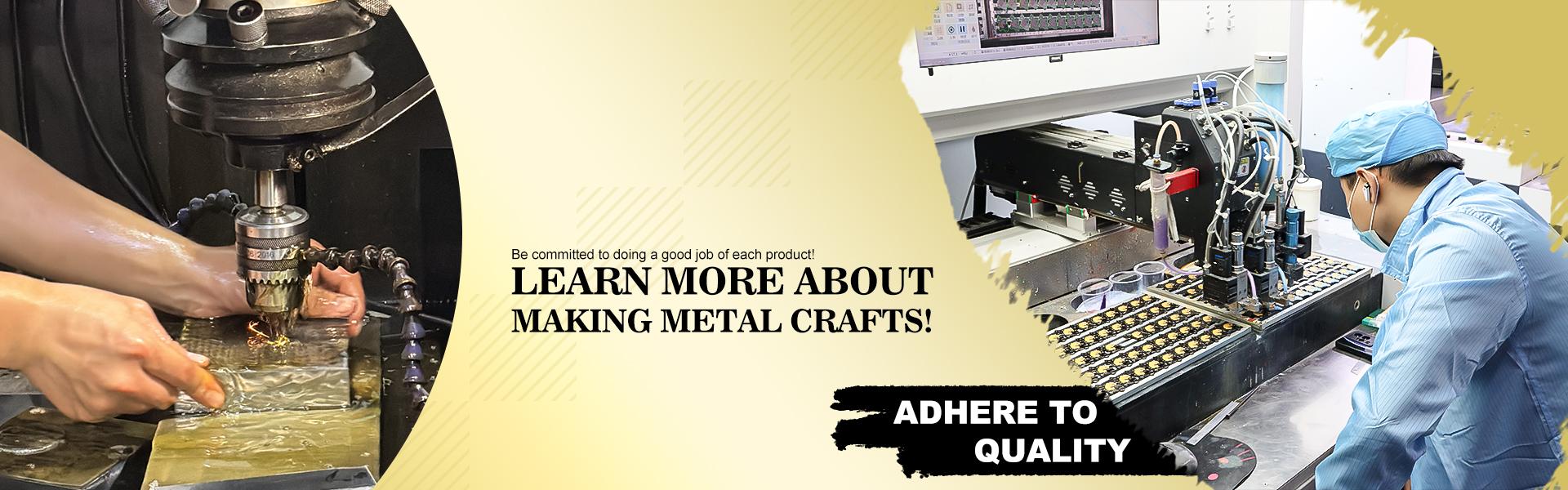
This is the single most reliable check, and it's the one most middlemen will refuse. Ask for a live video call — WhatsApp, Zoom, WeChat, whatever they use — walking through the workshop while you're on the line. Not a glossy edited marketing video. A live walk.
What to look for specifically for medal production:
| Station | What You Should See | Why It Matters |
|---|---|---|
| Die casting | Die-casting machines, zinc alloy ingots, molds being loaded | Proves medals are cast in-house, not bought as blanks |
| Polishing / tumbling | Vibratory tumblers or hand-polishing benches | Where finish quality is decided |
| Electroplating line | Plating tanks, rack lines, drying ovens | Many resellers do not own plating — it's the giveaway |
| Enamel area | Rows of workers filling enamel, cookie trays of medals | Shows hand-labor capacity for large orders |
| Printing / UV station | Ribbon sublimation press or pad printing machines | Ribbon customization in-house |
| QC and packing | Inspectors with a reference sample, light boxes, cartons | Confirms a real final-inspection stage exists |
Two tips. First, ask them to show you the medals currently in production — even if it's someone else's design, in a real factory there are always medals on trays. Second, ask a live question during the tour: "What are those medals on the third table?" A recorded video can't answer. A real floor can.
Certificates are the easiest thing to fake, so don't just look at whether a PDF exists. Look at whose name is on it.
Ask one practical follow-up: "Which of these certificates covers the medal line specifically?" A vague answer suggests a copy-pasted document pack.
Anyone can show you a photo of a medal. Ask for something harder: photos taken during production and quality control for a finished order in the same category and material as yours — ideally zinc alloy, similar size, similar plating.
Ask for:
A real factory produces these constantly, because clients ask constantly. Watch for the tell: if every photo they own is a professionally lit studio shot with no background context, ask why there are no shop-floor pictures.
This is the check that separates the professionals from the resellers, and it costs nothing. Ask technical questions where the answer requires someone who has actually run the process. A genuine manufacturer answers quickly and with specifics. A middleman goes quiet and replies with "let me check with the factory."
Good questions for a medal supplier:
If you get fluent answers to five or six of these, you're dealing with a factory. If you get "our factory can do anything you want," that's a sales script, not a workshop.
Money movement is the last honest signal. A few things to insist on:
Any one of these is worth a follow-up question. Two or more together should end the conversation.
| Buyer Question | Real Medal Factory | Trading Company / Middleman |
|---|---|---|
| Live video tour of production floor | arranged usually within 24 hours | declined or postponed indefinitely |
| Plating thickness and anti-oxidation spec | answered with micron ranges | forwarded to "our factory" |
| Where is my order right now? | specific stage: casting / plating / QC | vague reassurance |
| Design change mid-production | costed same day, decision by you | adds a margin and a delay |
| Defective plating on arrival | re-run on their own line, refund guarantee | argues with a third party while your date passes |
| Reorder next year | mold already in the library | may no longer have access to the same factory |
Copy this into your supplier evaluation notes and work down it. You can complete every line remotely.
No. Some trading companies are competent and worth their margin, especially if they hold inventory or handle complex logistics for you. The problem is paying factory-direct prices for factory-direct promises you can't verify. Know which one you're buying from, and price accordingly. If you're paying for factory direct, insist on factory evidence.
Ask for a photo or short video of your sample on their inspection table next to your artwork, and ask which station made it — casting, plating, or assembly. Then ask them to show the same station live on a video call. Any factory can do this in minutes; a reseller would have to coordinate with their upstream supplier to pull it off, and most won't bother.
Business license, ISO 9001 certificate (or equivalent) issued to the same legal entity, RoHS and CE documentation for the medal products, a written quotation with the specification line by line, the delivery schedule, and a written quality guarantee. Six documents, one email. A serious factory has all of them ready.
You can, and a real factory will welcome it — ours hosts client visits regularly in Shenzhen. That said, a live video tour is nearly as informative and costs you nothing in flights. If you're placing a six-figure order or signing an annual contract, an in-person visit is worth the trip. For a 500-medal race order, a 20-minute video call is enough.
Treat it as your answer. There are legitimate reasons to delay by a day or two — time zones, a busy production floor, someone's day off. There is no legitimate reason for a factory to permanently refuse showing its own workshop to a prospective customer. Decline the order and move on; the market has plenty of suppliers who will happily show you their machines.
Yes — before, during, and after production. We'll walk you through our 10,000+ square meter plant on a live video call covering casting, polishing, electroplating, enamel work, ribbon printing, QC, and packing. During your order you'll get photos at each stage, and we'll show you the finished goods before they're sealed if you ask. It's your order; you're entitled to see it being made.
Verifying a supplier shouldn't feel like detective work, and it doesn't have to be. If you'd like to run all seven checks on us, we'll make it easy: request a live video walkthrough of our production floor, ask for our business license, ISO 9001 certificate and RoHS/CE documentation, and fire off as many production questions as you like. We'd rather spend 30 minutes proving we make medals than 30 days convincing you.
Shenzhen Vistarts Craft Co., Ltd. has been manufacturing custom medals since 2011. Our ISO9001-certified plant covers more than 10,000 square meters with 5 production lines, 50+ machines, 150+ employees, 20+ engineers and a 10-person QC team handling full-chain inspection from raw zinc alloy to packed carton. The factory has passed audits for Disney and Universal Studios, and our medals have supported programs at the Paris Olympics, the Qatar World Cup, and major marathon events. We hold more than 1,000 custom medal designs — spinning, 3D, round, square, custom-shaped, glow-in-the-dark — and every medal is RoHS and CE certified. If bulk production doesn't match your approved sample, you get a full refund. That promise is in writing, and we'll send it before you pay anything.
Ask Sean for a factory video tour and our document pack:
WhatsApp / Phone: +86 181 2379 9506
Email: sean@vistarts.net
Website: https://www.vistarts.com/
Send us your race date and quantity, and ask us the hard questions. We've got nothing to hide — we've got a workshop to show you.

58 South Union Road, South Union Community, Shenzhen, Guangdong, China