View:14850Time:2026.10.24
A sports club is the best customer in the medal business and the worst-served one. Clubs order every season, across four to twelve age groups, for at least three award tiers — and most suppliers quote them as if each age group were a separate product. It isn't. One well-planned mold, three ribbon colours and a simple tier system can cover an entire club season for a fraction of what clubs typically pay, and we've built exactly that structure for football academies, basketball programmes and dance schools on three continents.
This guide is how we plan a season of custom sports club medals: the award tiers clubs actually need, the one-mold system that cuts the cost of all of them, sizes by age group, what football, basketball and dance medals each demand from a design, the real numbers for 2026, and the ordering calendar that works around a season that ends when it ends.
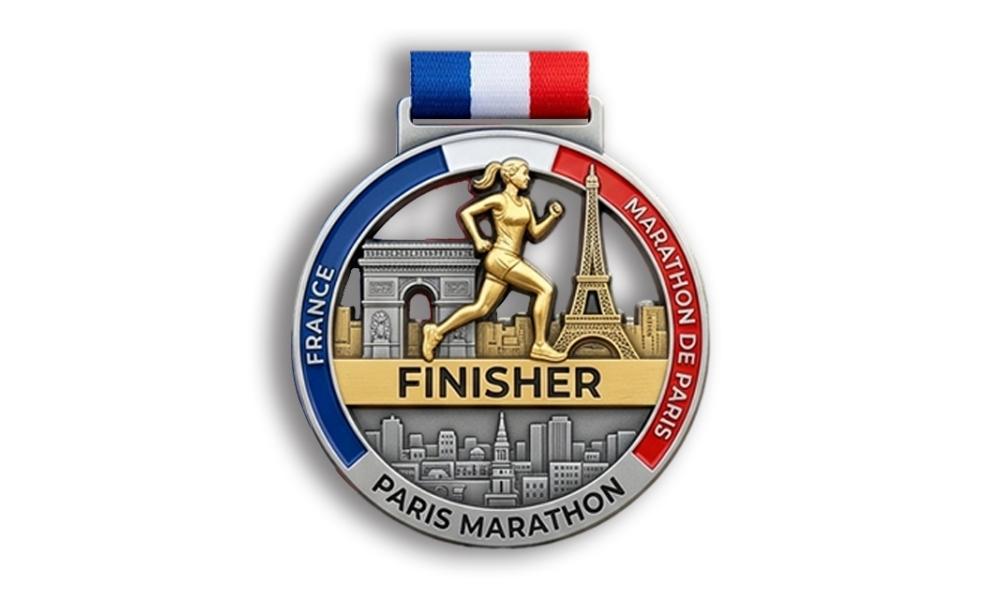
For a typical club season, order 55–70mm medals at 2.5–3mm thickness for youth and adult teams, 45–55mm for under-8s, with one base design covering all age groups. Standard minimum is 50–100 pieces per design, unit prices run $1.70–$2.10 at 500–999 pieces and $1.30–$1.60 at 1,000–2,999, production takes 10–15 working days, and repeat seasons on the same mold drop to 7–12 days with no tooling cost. Order eight weeks before your last matchday or end-of-season presentation.
| Age Group | Diameter | Thickness | Weight | Ribbon |
|---|---|---|---|---|
| U6–U8 | 45–50mm | 2.0–2.5mm | 20–28g | 20mm × 65cm |
| U9–U12 | 50–60mm | 2.5mm | 28–42g | 20–25mm × 70cm |
| U13–U16 | 60–65mm | 2.5–3.0mm | 42–60g | 25mm × 80cm |
| U17–U21 | 65–70mm | 3.0mm | 60–80g | 25mm × 90cm |
| Adult / open | 70–76mm | 3.0–3.5mm | 80–110g | 25mm × 90cm |
Three structural differences, and they change everything about how the order should be built.
Clubs order every year. A marathon is an event; a club is an institution. The medal that arrives in season one should come back in season two and season five — same crest, updated year. This makes the mold the most valuable asset in the relationship: once it exists at the factory, every future order skips tooling entirely. We keep club molds on file for years for exactly this reason, and a repeat season order runs 7–12 days instead of 10–15.
Clubs order in tiers, not in one SKU. Champions, runners-up, participation, MVP, top scorer, most improved, coach's award, volunteer of the year. A club that prices each tier as a separate design pays several mold fees and loses volume pricing on each small run. A club that builds one tier system pays one mold and hits the price break of its total volume.
The club decision-maker is a volunteer or a coach, not a procurement team. Budgets come from membership fees and sponsorship, approval is one person, and the deadline is the presentation night — which moves when finals get rescheduled. The order needs to be simple, date-flexible where possible, and impossible to get wrong at handout time, which is why we pack by team.
Across the football, basketball and dance programmes we supply, the tier list is remarkably consistent:
| Tier | Typical Share of Order | Notes |
|---|---|---|
| Participation (every player) | 70–85% | The volume line; design for pride, keep unit cost tight |
| Champions / winners | 3–8% | Larger or thicker; "1st" plate or gold ribbon |
| Runners-up / finalists | 3–8% | Silver treatment of the champion tier |
| Individual awards (MVP, top scorer, most improved) | 2–5% | Smaller runs; often engraved with the player's name |
| Coach / volunteer awards | 1–2% | Small quantities, can be upgraded without hurting the budget |
The arithmetic that matters: participation medals are 70–85% of your pieces. If you get the participation medal right at a tight unit cost, you can afford to upgrade the champion and MVP tiers substantially — and the upgrades on 5% of the order cost almost nothing in absolute terms.
This is the core of the guide, and it's the difference between clubs that overpay and clubs that don't. The idea: one medal body, one mold, and every tier expressed through elements that don't require new tooling.
The levers, in order of cost:
A real structure from a football academy we supply in England: one 63mm shield-shaped die with the club crest, three plating tones, two tier plates ("LEAGUE CHAMPIONS", "RUNNERS-UP"), gold/silver/club-green ribbons, and engraved names on the individual awards. Total distinct looks: eight. Total molds: two. That programme covers 640 players across 11 age groups.
The one warning: separate age groups by ribbon and plate, not by size. Making U9s a different diameter from U11s multiplies your molds for no benefit anyone at the club can see. Keep one size per broad band (see the table below) and let colour do the differentiating.
Clubs span ages five to fifty, which is a wider range than any race. The bands that work:
| Age Band | Recommended Size | Weight Target | Why |
|---|---|---|---|
| U6–U8 | 45–50mm, 2.0–2.5mm | 20–28g | Comfortable all afternoon; children this age judge a medal by colour and shape |
| U9–U12 | 50–60mm, 2.5mm | 28–42g | Room for crest, season year and league name; reads in team photos |
| U13–U16 | 60–65mm, 2.5–3.0mm | 42–60g | Teenagers compare medals with other clubs'; size starts to matter socially |
| U17–U21 | 65–70mm, 3.0mm | 60–80g | Near-adult weight; semi-pro programmes sit here |
| Adult / open | 70–76mm, 3.0–3.5mm | 80–110g | The race-standard 3" medal; full value-per-gram territory |
If the club insists on one size for everyone from U7 to open age, 60mm at 2.5mm is the workable compromise — light enough for the youngest, credible enough for the oldest. But when budget allows, the two-band split (50mm for U8-and-under, 60–63mm for everyone else) is worth it; handing a nine-year-old and a seventeen-year-old the same medal serves neither.
Football is the largest club-medal category we ship, and the design language is well established: the club crest or a football motif, the season year, and the league or tournament name. Three things specific to the sport:
Volume reality: a club with 12 teams of 14 players needs roughly 170 participation medals plus 30–40 tier medals — around 210 pieces, comfortably above the 100-piece price break if ordered together.
Basketball programmes differ from football in two ways that affect the medal: tournaments and individual recognition.
Dance schools are the outlier of the three, and the differences matter:
The same one-mold system covers every club sport; only the motif and the tier structure change. Quick notes from orders we run:
For clubs, engraving is not a luxury — it's the difference between a medal that goes in a drawer and one that stays on a bedroom wall. Name and shirt number on the back, laser-engraved, runs $0.15–0.30 per piece and requires a clean roster: one row per player, name exactly as it should appear, team and number in separate columns. Allow 15–20 working days instead of 10–15, because each medal is engraved, matched and bagged individually.
Two operational details that decide whether this goes smoothly:
Real factory pricing for a 60mm zinc alloy medal, single-tone plating, soft enamel, printed ribbon, ex-works Shenzhen:
| Quantity | Unit Price | Mold Fee | Typical Buyer |
|---|---|---|---|
| 50–99 | $2.30 – $2.90 | $80 – $150 | Single team, small dance school event |
| 100–499 | $1.90 – $2.40 | $80 – $150 | Small club, one season |
| 500–999 | $1.70 – $2.10 | Often waived | Mid-size club, full programme |
| 1,000–2,999 | $1.30 – $1.60 | Waived | Large club or multi-club league |
| 3,000+ | From $1.15 | Waived | Association-wide programmes |
Now apply the one-mold system to a realistic example. A club with 420 players across 12 teams:
Same club, same coverage, about a third less money — and season two costs $912 plus engraving, because the mold already exists. That's the compounding return that scattered buyers never see.
Club seasons end on the pitch, not on a spreadsheet, and presentation nights move when finals move. The planning rules that keep it safe:
| Presentation Timing | Place Order By | Notes |
|---|---|---|
| End of spring season (May–June) | Early March | Peak season; production slots fill from March |
| Autumn season end (Oct–Nov) | Mid-August | Order in the summer lull, not the September rush |
| Year-end shows (Dec) | Early October | Freight congestion in November |
| Jan–Feb events | Late November | Chinese New Year closes the entire chain for 2–3 weeks |
Two buffer strategies for clubs specifically. First, order the participation medals early — headcount is stable from mid-season — and leave the champion tier flexible: if your structure uses plates, champion medals can be assembled from stock parts after the final, or ordered as a fast repeat. Second, if a final gets rescheduled and the date truly collapses, express freight (3–7 days) plus a mold already on file is the rescue path — which is one more reason to keep your mold at a factory rather than requesting it be scrapped after season one.
1. Ordering per team instead of per club. Six 40-piece orders at 50–99 pricing cost roughly 45% more per medal than one 240-piece order. Consolidate; the one-mold system exists to make this painless.
2. Treating every tier as a new design. Molds multiply, tooling costs multiply, minimums multiply. Ribbons and plates differentiate for pennies.
3. Skipping the physical sample because "it's just participation medals." The participation medal is the one every player holds. It deserves the same golden-sample discipline as a marathon finisher medal.
4. Collecting rosters too late. Engraving needs a final list two weeks before production, or you get permanent-metal spelling errors — the most expensive kind of typo in youth sport.
5. Ordering exactly the headcount. Players join late, medals get dropped, one gets personalised wrong. Order 10% spares; at club pricing they cost less than one pizza night.
6. Not keeping the mold on file. Asking a factory to scrap your die after season one and re-cutting it in season two pays for the same tooling twice.
7. Copying last season's order sheet without updating the year. We see it every January: a confirmed order with 2025 on the artwork, caught — or not caught — at the sample stage. Check the year first. It's the one detail that appears on every medal and changes every season.
For a 60mm zinc alloy medal with soft enamel, single-tone plating and a printed ribbon: about $2.30–$2.90 each at 50–99 pieces, $1.90–$2.40 at 100–499, $1.70–$2.10 at 500–999, and $1.30–$1.60 at 1,000–2,999. Mold fees run $80–150 for a 2D design and $150–300 for 3D, usually waived above 1,000 pieces — and never charged again on repeat seasons using the same mold.
45–50mm for under-8s, 50–60mm for ages 9–12, 60–65mm for ages 13–16, and 65–76mm for older youth and adult teams. If one size must cover the whole club, 60mm at 2.5mm thickness is the workable compromise, with ribbon colours differentiating age groups.
Yes — that's exactly how we build club programmes. One mold with the club crest, and tiers differentiated by plating tone, ribbon colour, small tier plates ("CHAMPIONS", "MVP") and optional engraving. A real academy example: eight distinct awards from two dies covering 640 players.
Yes. Laser engraving on the back costs $0.15–$0.30 per medal and needs a final roster with names, teams and numbers in separate columns. Allow 15–20 working days instead of 10–15, and we'll pack the medals by team with a roster sheet in each bag.
50–100 pieces per design. Complex work — custom shapes, spinners, hard enamel, 3D relief — starts at 100–300 pieces because the setup only makes sense at that volume. Repeat orders on an existing mold can run below the standard minimum; ask us.
Eight weeks before the presentation night, ten to be safe: 7–10 days for mold and sample, 10–15 working days production, 3–7 days express freight, plus buffer. Repeat-season orders on an existing mold run 7–12 days of production, so season two is faster by design.
Different design logic, same manufacturing. Dance and martial arts programmes order more frequently (recitals, gradings, competitions), in smaller quantities, and benefit most from series designs — one medal body with the level or belt colour as the variable. Students should be able to see the next level waiting.
Send us your club crest, your age groups and your headcount, and we'll come back within 24 hours with a proposed tier system — how many awards one mold can produce, what each tier costs, and the delivery date against your presentation night. Free design work included, you keep the artwork rights, and your mold stays on file so season two is a 7–12 day repeat at production cost only.
Shenzhen Vistarts Craft Co., Ltd. has manufactured custom medals since 2011 in our own ISO9001-certified factory — over 10,000 square meters, 5 production lines, 50+ machines, 150+ employees, 20+ engineers and a 20-person design team beside the production floor. The plant has passed audits for Disney and Universal Studios, and our medals have supported the Paris Olympics, the Qatar World Cup and major marathon events. We hold 1,000+ designs on file — spinning, 3D, custom shapes, glow-in-the-dark — all RoHS and CE compliant, with a written guarantee: if bulk production doesn't match your approved sample, you get a full refund.
Send Sean your crest and headcount:
WhatsApp / Phone: +86 181 2379 9506
Email: sean@vistarts.net
Website: https://www.vistarts.com/
One closing thought from the factory floor: a club medal is the only medal most of your players will ever be given by name, in front of their team, by a coach who watched them all season. Build the programme to match that moment — one mold, honest costs, and a system your club can keep for a decade.

58 South Union Road, South Union Community, Shenzhen, Guangdong, China